Standards • 2026-02-10
Bottom Bracket Shells & Bearing Standards
BSA, PF30, T47. Why they exist, why they creak, and how to identify what you need.
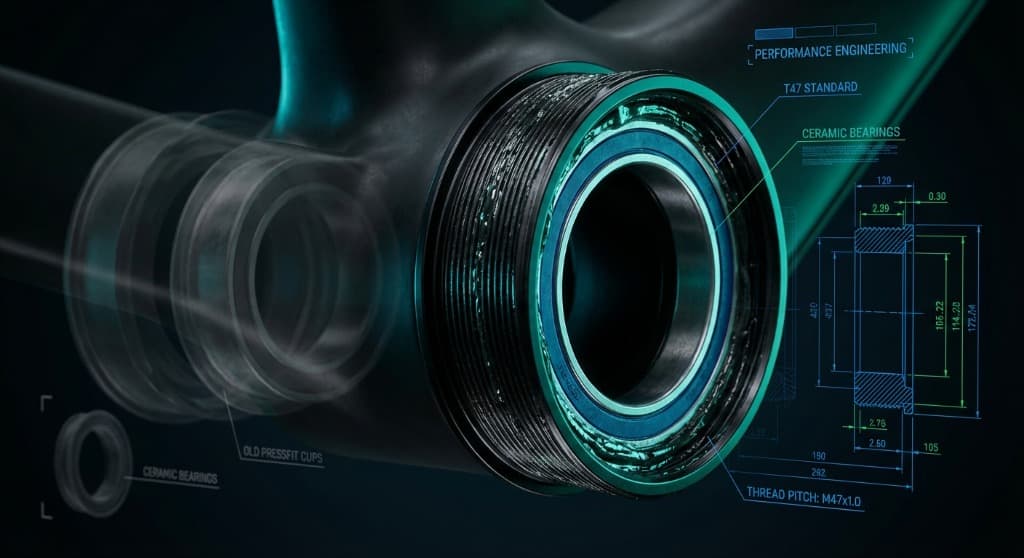
The Bottom Bracket (BB) is the most notorious component in cycling. What was once simple (BSA) became complex with the Press-Fit revolution. Now, T47 puts us back on the right track.
1. The Shell Standards
The "Shell" is the hole in your frame. You cannot change this. You must adapt to it.
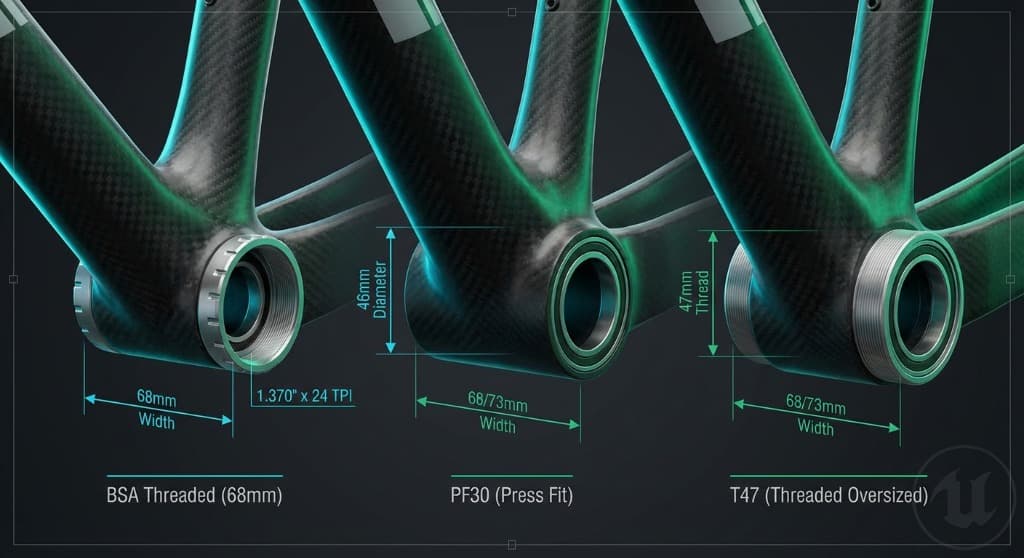
| Standard | Type | Diameter | Width (Road) |
|---|---|---|---|
| BSA (English) | Threaded | 34.8mm | 68mm |
| T47 | Threaded | 47mm | 68mm or 86mm |
| PF30 | Press Fit | 46mm | 68mm |
| BB86 | Press Fit | 41mm | 86.5mm |
2. T47: The Savior Standard
T47 is essentially PF30 but threaded. It uses the large 46mm diameter of PF30 (allowing 30mm spindles) but adds threads to eliminate creaking and ensure parallel alignment.
- T47 Internal (85.5-86.5mm width): Bearings sit inside the shell. Used on Trek and other BB86 successors.
- T47 External (68mm width): Bearings sit outside the shell. Used on custom steel/Ti bikes and BSA successors.
3. Spindle Diameters
Once you know your shell, you must match the BB bearing ID to your crank spindle.
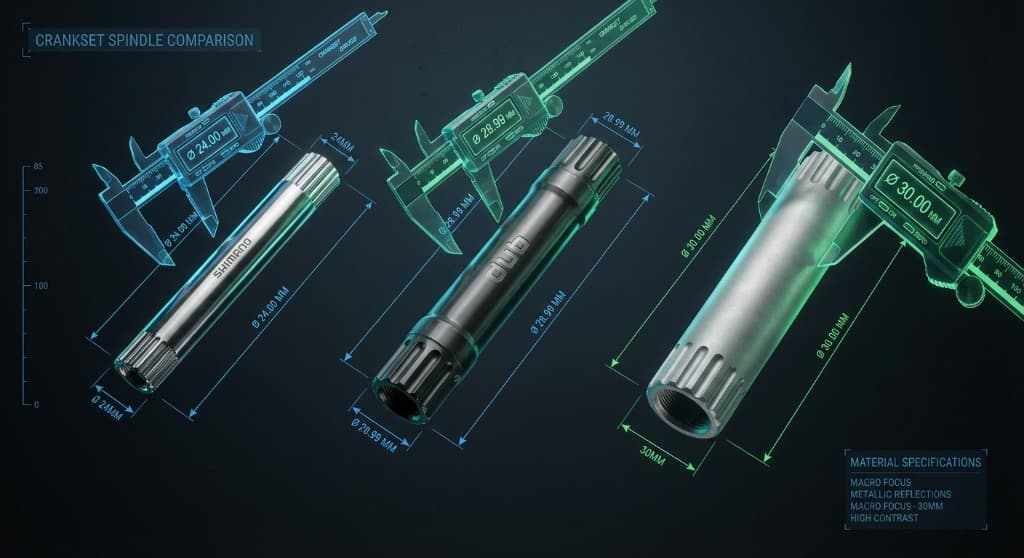
- 24mm (Shimano HTII): The gold standard for durability. Fits in almost any shell.
- 30mm: Stiff and light, but leaves very little room for bearings in a BB86/BSA shell (tiny bearings = fast wear). Ideally used with PF30/T47.
- 28.99mm (SRAM DUB): A compromise. Fits slightly better in BSA shells than 30mm while being stiffer than 24mm.