700c vs 650b Gravel Wheels: The Real Debate
700c rolls faster. 650b fits more tire. The real question is when wider matters more than faster.
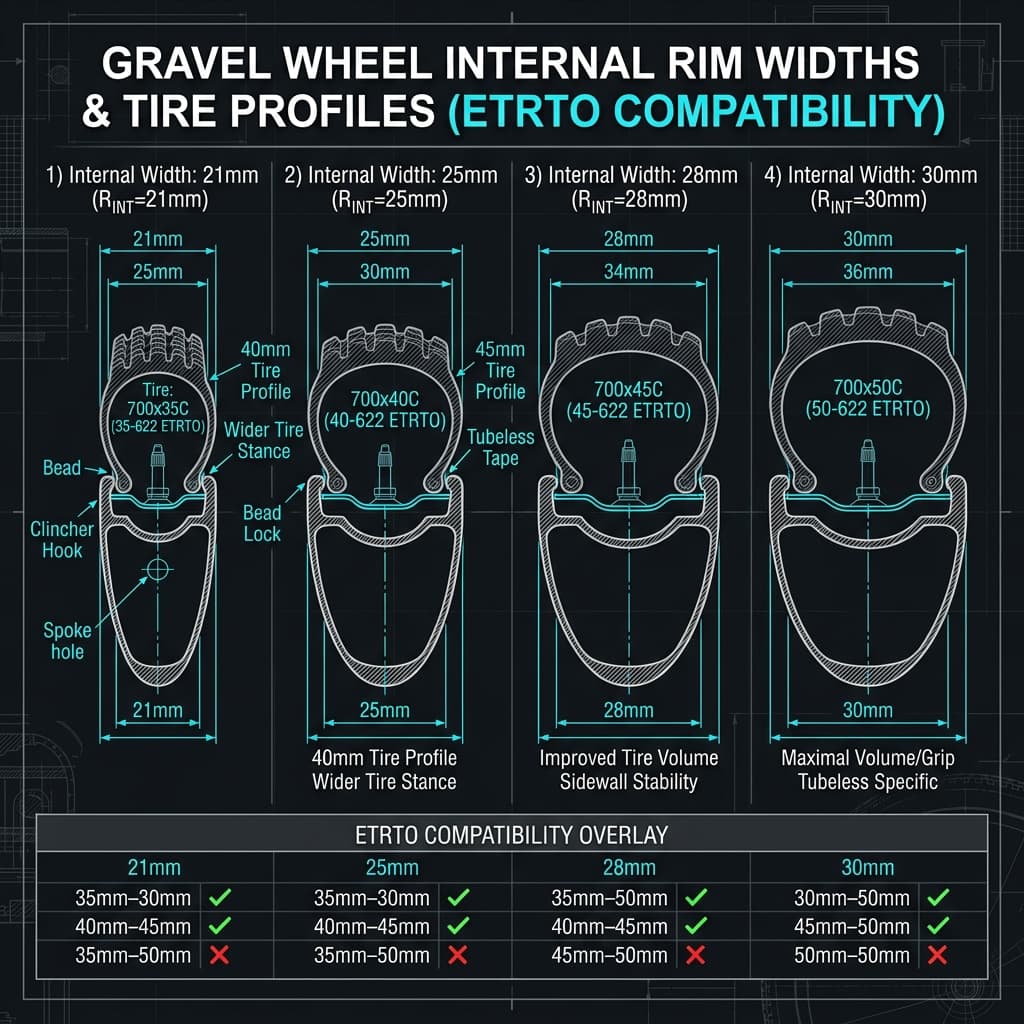
The 700c vs 650b debate isn't about which is objectively better — it's about which is better for your frame, your terrain, and your tire preferences. Here's the framework to make the decision clearly.
The Physics Summary
700c (622mm BEAD)
- Larger diameter rolls over obstacles more easily
- Faster at equal tire widths
- Far more tire selection (40-57mm)
- Better suited to open, fast gravel
- Standard for most riders
- Typical clearance: 40-55mm for modern frames
650b (584mm BEAD)
- Smaller diameter, fits wider tires in same clearance
- Lower center of gravity — better handling on tech terrain
- Limited tire selection vs 700c
- Better on small frames where 700c looks proportionally wrong
- Pairs with 2.0-2.25" tires for massive volume
- Some frames support both via flip chips
The Clearance Advantage: The Key 650b Use Case
This is where 650b makes its clearest argument. A frame that clears 700c×40mm will typically clear 650b×2.1" (53mm actual width). Why? The 650b rim is 38mm smaller in diameter — so even though the tire is wider, the overall outer diameter is similar, meaning the frame's chainstay bridge and fork crown have the same clearance. You get a dramatically wider tire in the same frame.
Equivalent Outer Diameters
| 700c Tire | Equivalent 650b |
|---|---|
| 700c × 32mm | 650b × 1.75" (47mm) |
| 700c × 38mm | 650b × 2.0" (51mm) |
| 700c × 45mm | 650b × 2.1" (53mm) |
| 700c × 50mm | 650b × 2.2" (56mm) |
Approximate. Actual outer diameter depends on inflation pressure and casing construction.
When to Choose Each
Before switching wheel sizes, validate that your frame genuinely supports the tire width you want. Use CrankSmith to enter your frame model, current wheel size, and target tire — and confirm clearance before buying new wheels.