Aero Gains on Gravel: Deep Section Wheels vs Narrow Tires — Real Watts
Wind tunnel numbers were built for smooth roads. Here's what actually happens to aero gains when the surface turns to gravel.
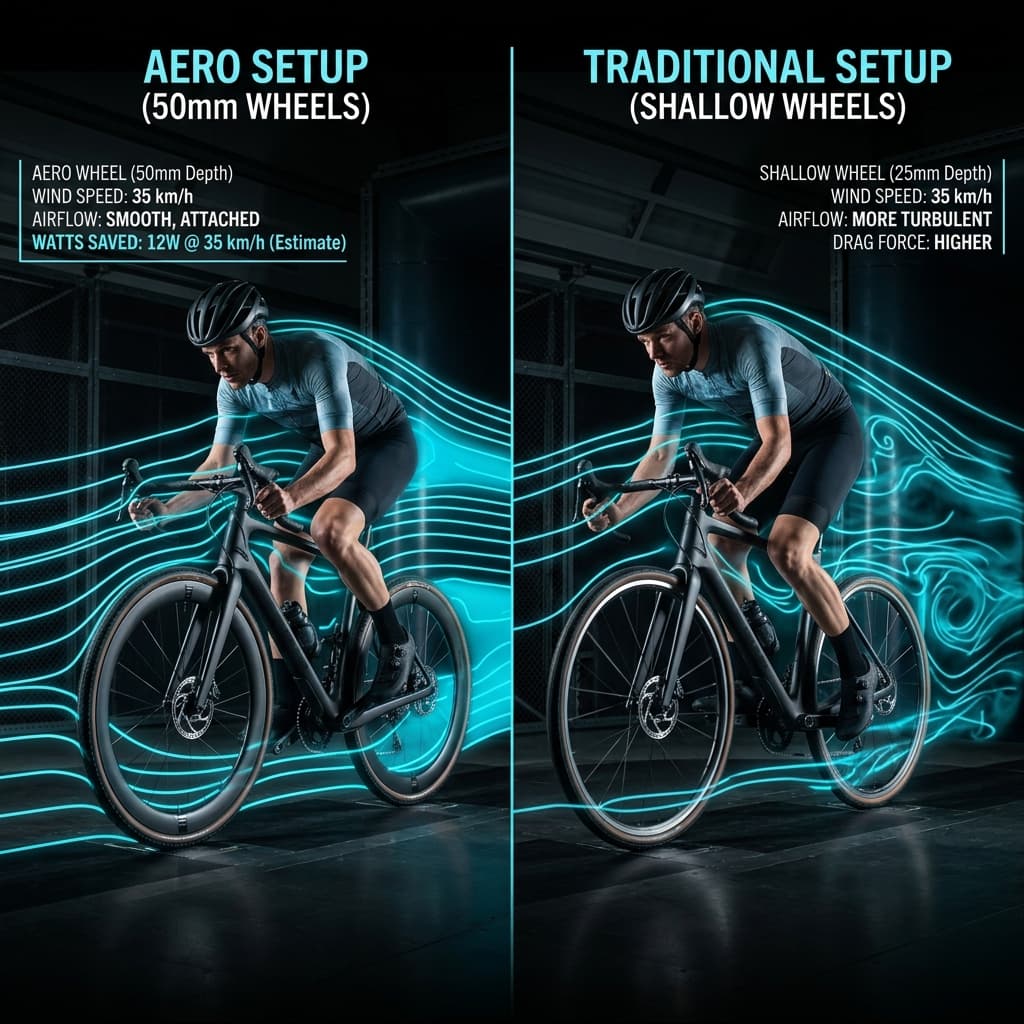
The aero upgrade conversation on gravel is real but misframed. Marketing copy quotes watt savings measured in velodrome conditions. Gravel is not a velodrome. Here's how those numbers actually hold up on real terrain, and where to actually invest if speed is the goal.
Why Gravel Changes the Aero Equation
Three factors significantly reduce aero gains on gravel compared to smooth road:
- Lower average speed. Aerodynamic drag scales with the square of speed. At 30 km/h (typical gravel race pace), drag is only 56% of what it is at 40 km/h (typical road race pace). A wheel saving 15W on a road course saves ~8W on gravel.
- Variable terrain blocks wind. Trees, ridgelines, and elevation changes mean you're rarely in a clean headwind on gravel. Aero benefits are maximized in sustained exposed headwinds — which may represent only 20-40% of a gravel ride.
- Surface roughness dominates at gravel speeds. Rolling resistance on rough gravel contributes more to total resistance than aerodynamic drag. Optimizing tires (width, compound, pressure) returns more speed than wheel aerodynamics on technical terrain.
Real Watt Savings by Component
Estimated Watt Savings at 30 km/h on Mixed Gravel
Estimates based on available gravel-specific testing and scaled from controlled road test data. Actual savings vary significantly by terrain and conditions.
The Wheel Depth Sweet Spot for Gravel
If you're buying wheels primarily for gravel, 35-45mm rim depth is the practical optimum for most riders and events:
- Under 30mm depth: Pure climbing wheel. Minimal aero benefit. Best for alpine races or very hilly courses.
- 35-45mm: Best balance. Real aero savings on fast sections, manageable in crosswinds, not punishing on climbs.
- 50mm+: Maximum aero — but requires calm conditions and a course where sustained speed is achievable. Crosswind handling becomes challenging on exposed gravel roads.
The Honest Priority Order
If you want to go faster on gravel and have a limited budget, here's the honest investment order:
- Fit and position (free with a professional bike fit, ~$200-300)
- Tire optimization — right width, right compound, tubeless setup (~$120-180)
- Aero helmet (~$200-300)
- Skinsuit (~$150-250)
- Aero wheelset (~$1,000-2,500)
The wheelset comes last not because it doesn't work, but because the items above it deliver more return per dollar on real-world gravel terrain. Use CrankSmith to compare wheel weight vs depth trade-offs for your specific build.