The First $500 Upgrade on a Gravel Bike: Where the Money Actually Goes
Tires return the most per dollar. Wheels look best on Instagram. Here's the actual ROI-ranked order for your first $500 in gravel upgrades.
Most gravel bikes under $3,000 ship with compromises — heavy tires, box-section alloy wheels, narrow drops, and sometimes even tube-type setups in 2026. That's where the margins are. Here's how to spend your first $500 in upgrades to extract the maximum performance from any stock gravel bike.
The ROI-Ranked Upgrade List
Tires + Tubeless Setup
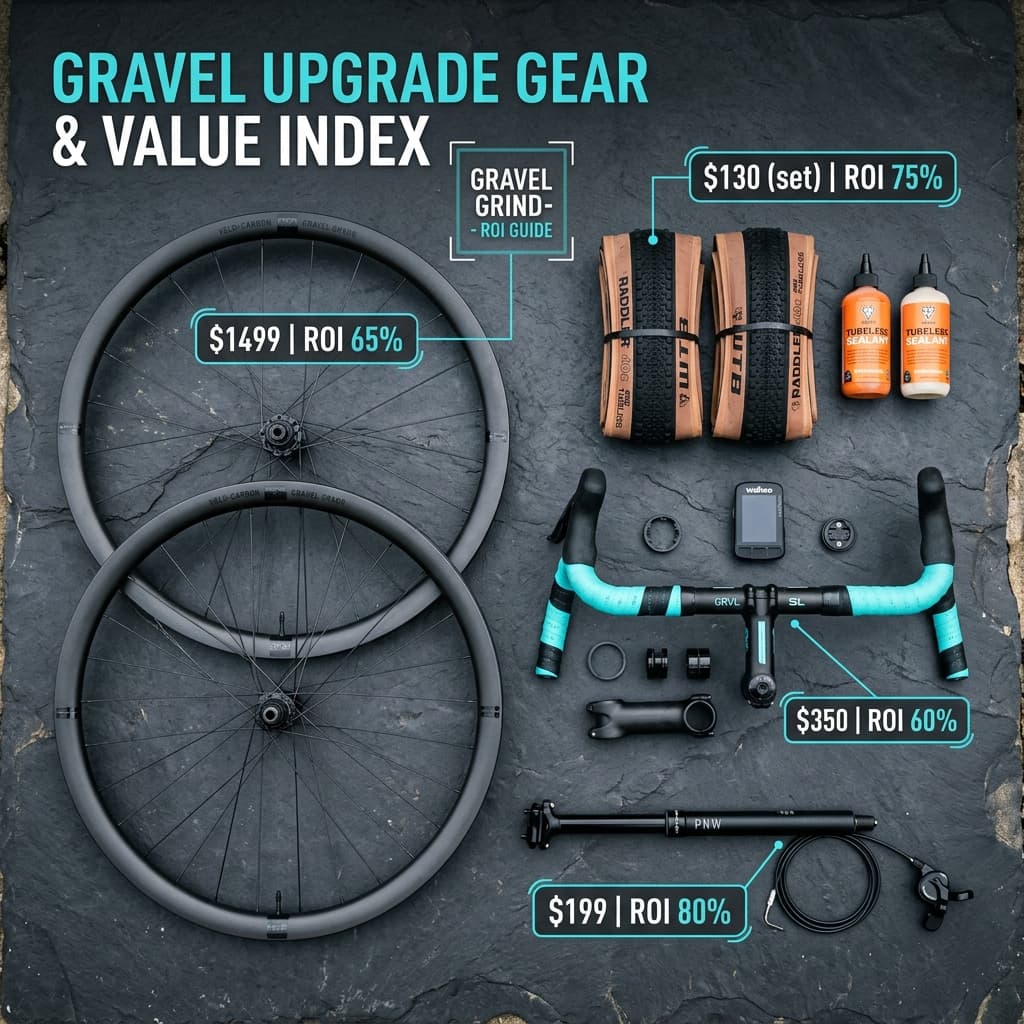
$120–$200Replace stock OEM tires with quality tubeless-ready rubber at the maximum width your frame clears. Then convert to tubeless. Combined, this delivers faster rolling on gravel, more grip, fewer flats, and more comfort. The Maxxis Rambler 45mm or Teravail Cannonball 42mm are proven choices. Add Stans tubeless tape, quality valves, and ~2oz of sealant per tire.
Gravel Handlebars (if on road bars)
$100–$200If your bike shipped with road bars (4° flare or less), upgrading to proper gravel bars with 12-16° flare transforms technical terrain confidence and reduces hand fatigue on long rides. The PRO Discover ($120) and Salsa Cowbell 3 ($150) are excellent entry-level options. If you already have flared drops, skip this.
Saddle (if current saddle doesn't fit)
$80–$200No one talks about saddles as upgrades, but a mis-fitting saddle kills the joy of every ride. Get a pressure map fit at a bike shop before buying. The WTB Volt/Volt Race or Fizik Terra Argo are popular gravel-specific options. ROI is conditional — only invest if your current saddle genuinely hurts.
Cockpit: Stem Length & Bar Reach
$40–$120Stock stem length is rarely optimal. A 10-15mm shorter stem improves handling on technical gravel; a longer stem adds stability on open roads. This is a $40-80 change that can transform bike fit. Only invest after establishing that fit is the issue — try a professional bike fit first.
Chainring Size Optimization
$40–$80If your stock chainring is too big or too small for your terrain, swapping it is cheap and effective. Going from a 42t to 38t for more climbing range costs $50-70 and is immediately noticeable. See the 1x vs 2x numbers post for range calculations before committing.
What to Upgrade Later
After tires and fit, the next logical category is wheels — but that's typically $1,000-2,500 for a meaningful improvement, which blows past the “first $500” budget. When you're ready, a quality alloy set with wide internal rims (25-28mm) and tubeless compatibility is the minimum to consider. Carbon comes after that.
Drivetrain upgrades only make sense when you're limited by gear range (chainring swap is cheaper than a new groupset), reliability, or weight targets for a specific event. Maintaining your existing groupset well is significantly cheaper than replacing it prematurely. Use CrankSmith's weight tool to track your build's total weight and identify where meaningful savings are actually available.