Gravel Geometry Explained: Stack, Reach, Trail and How They Affect Your Ride
Stack and reach tell you if it fits. Trail tells you how it handles. Chainstay tells you how it climbs. Here's what each number actually means.
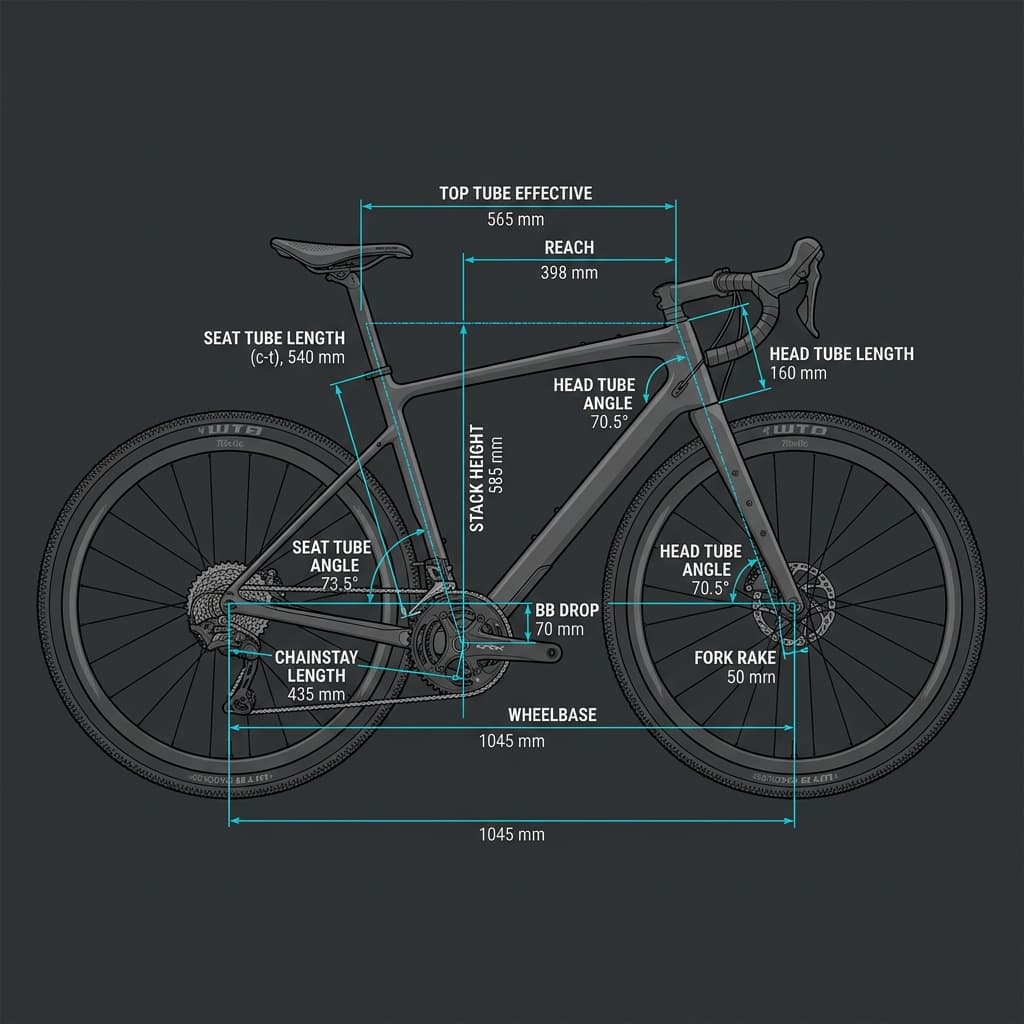
Geometry numbers are hidden in plain sight on every frame spec sheet, yet most riders only look at frame size. Understanding what stack, reach, trail, and chainstay length actually mean — and how 2026's longer, slacker trend changes the picture — is the difference between buying a bike that fits and buying one that fighting you on every ride.
The Four Numbers That Actually Matter
Stack
Vertical distance: bottom bracket center → top of head tube
How high your handlebar position will be, before stem angle. Higher stack = more upright. Lower stack = more aggressive. Gravel bikes typically run 580-640mm stack on a size 56cm. More stack than road bikes because upright position is more comfortable on long gravel hours.
Reach
Horizontal distance: bottom bracket center → top of head tube
How stretched out you'll be. Modern gravel reach has grown dramatically — where a size 56cm road bike had 380-385mm reach, modern gravel bikes of the same nominal size run 390-400mm. You compensate with stem length, but there are limits. This is why new 2026 bikes often need sizing down.
Trail
Horizontal distance: steering axis ground contact → tire contact point
Steering stability and self-centering. 55-70mm for most gravel bikes. Less trial (55mm) = quicker, more alert steering. More trail (70mm) = more planted, stable at speed. Head tube angle + fork rake together determine trail. Slacker HTA with proportional rake keeps trail in the sweet spot.
Chainstay Length
Center of bottom bracket → center of rear axle
Wheelbase, tire clearance, and climbing feel. Shorter (420-430mm) = more snappy, easier to lift front wheel on climbs. Longer (440-450mm) = more stable at speed, more tire clearance, better loaded carrying. Most 2026 gravel bikes run 430-445mm.
The 2026 Trend: Longer and Slacker
Compare a 2018 size L gravel bike to its 2026 equivalent:
| Measurement | 2018 Era | 2026 Era | Effect |
|---|---|---|---|
| Reach | 375-385mm | 390-405mm | More reach, need shorter stem |
| Head Tube Angle | 72.5-73° | 71-71.5° | Slacker = more stable, less twitchy |
| Chainstay | 420-430mm | 430-445mm | Longer = more tire clearance |
| Wheelbase | 1,010-1,025mm | 1,030-1,055mm | Longer = more stable at speed |
| BB Drop | 70-75mm | 70-80mm | Lower = more stable, more clearance |
Flip Chips: What They Actually Change
Flip chips are reversible adjustable dropouts or inserts that offer two geometry modes. What most actually change:
- Head tube angle: ±0.5-1° — slacker for technical terrain, steeper for road feel
- Bottom bracket height: ±3-5mm — lower is more stable, higher is more clearance-friendly
- Chainstay length: ±5-10mm — affects wheelbase and how the bike climbs
- Wheel size: 700c ↔ 650b on some frames, with geometry compensated to maintain similar ride height
Most riders set their flip chip once and leave it. The practical difference between modes is real but subtle — more noticeable on technical, mixed-terrain riding than on straightforward gravel roads.
To compare geometry numbers across specific frames — enter two frames in CrankSmith and see how reach, stack, trail, and chainstay compare side by side.