Gravel Drivetrain Wear: When Your Chain, Cassette & Chainring Actually Need Replacing
0.5% stretch means replace the chain. Hit 0.75% and you're probably replacing the cassette too. Here's what this looks like in real gravel miles.
Related: The Gravel Mullet Drivetrain Guide • 1x vs 2x on Gravel
Gravel is harder on drivetrains than road. Dust, mud, and grit act as abrasives between every moving surface. Most drivetrain maintenance intervals are designed for road riding — and they're dangerously optimistic for gravel. Here's what the actual numbers look like.
Understanding Chain Wear Percentages
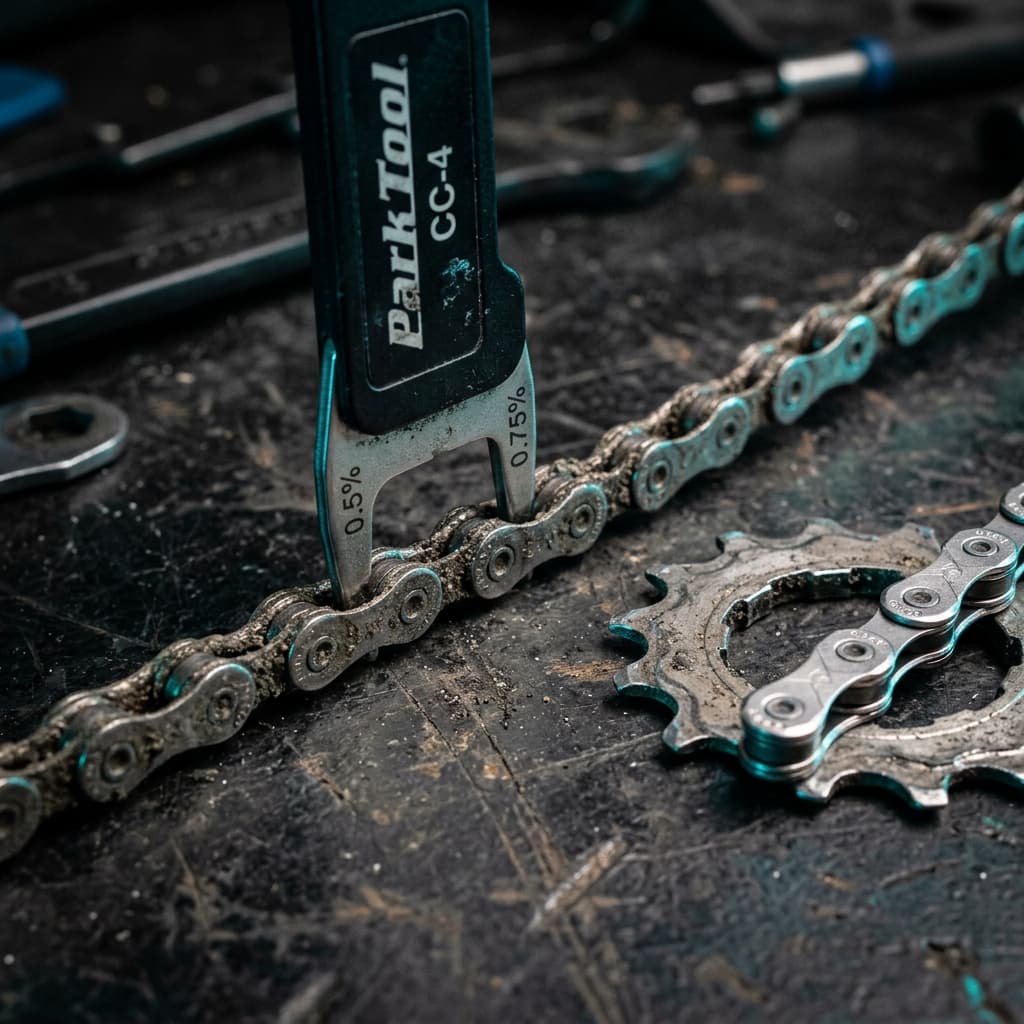
Chain wear is measured as elongation — how much longer the chain has become relative to a new chain. A 12-inch (30.48cm) pitch spans exactly 12 links when new. As the pins and rollers wear, the pitch increases. A chain checker like the Park Tool CC-4 measures this elongation on a 0% (new), 0.5%, and 0.75% scale.
Chain Wear Action Guide
0% – 0.5%
Good
Chain is fine. Clean and lube, continue riding.
0.5%
Replace Chain
Replace chain now. Cassette and chainring likely still good if you haven't been lazy.
0.75%
Replace Chain + Cassette
Chain wear has transferred to cassette. New chain will skip. Replace both (and inspect chainring).
1.0%+
Full Drivetrain
Chain, cassette, and chainring all need replacement. Expensive lesson.
Real Gravel Miles: How Fast Does This Happen?
Chain wear rate varies enormously by conditions. A rough guide for gravel-specific riding:
| Conditions | Miles to 0.5% | Miles to 0.75% |
|---|---|---|
| Dry, dusty gravel (dry western US) | 800–1,500mi | 1,200–2,000mi |
| Mixed conditions (Midwest, spring) | 1,200–2,000mi | 1,800–2,800mi |
| Road-like packed gravel (asphalt base) | 2,000–3,000mi | 3,000–4,000mi |
| Muddy/wet (PNW, winter UK) | 500–900mi | 800–1,300mi |
| Wax-lubed chain (dry conditions) | 2,000–3,500mi | 3,000–5,000mi |
Highly variable by rider weight, chainring-to-cassette ratio alignment, and lube quality. Check chain wear every 300-500 miles.
1x vs 2x Wear Patterns
On a 1x drivetrain, the chain always runs on the same 34-42t ring. There's no front shifting to distribute wear. Chainring teeth show visible sharpening (shark-fin profile) faster than on 2x. Replace your 1x chainring every 2-3 chain replacements, or when teeth visibly taper.
On a 2x drivetrain, wear is distributed across two rings but the chain is also longer (more links = more potential wear points). The front derailleur creates additional friction. In practice, 2x and 1x cassettes wear at similar rates on gravel.
The Lube Matters More Than You Think
The right lube for your conditions extends chain life 2-3×:
- Dry/dusty gravel: Chain wax (Squirt, Silca Super Secret) — doesn't attract grit, longest chain life in dry conditions
- Mixed/wet: Quality wet lube (Finish Line Wet, Muc-Off C3) — more durable than wax when conditions are unpredictable
- Mud/heavy rain: Heavy wet lube or ceramic-based lube — prioritize retention over cleanliness
Avoid generic hardware store oils and spray lubricants on gravel — they wash out quickly and attract grit aggressively.