Gravel Drivetrain & Groupset Configurations
1x simplicity vs 2x cadence. The rise of the Mullet. Here is the engineering logic behind your choices.
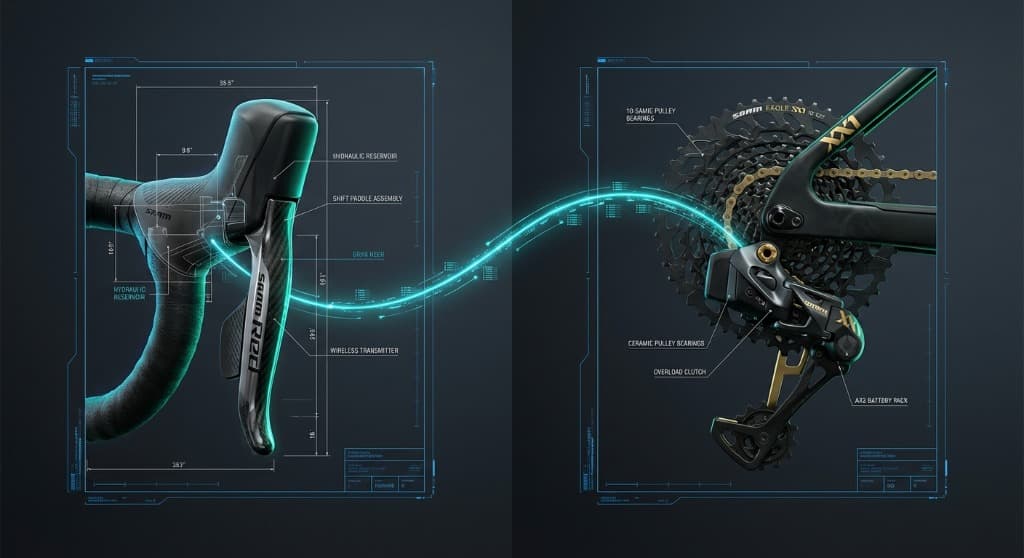
Gravel cycling has evolved from "road bikes with big tires" into a discipline with its own distinct mechanical requirements. The drivetrain market is dominated by Shimano GRX, SRAM AXS XPLR, and the hybrid "Mullet" ecosystem.
1. The 1x vs 2x Calculus
The choice between single and double chainrings comes down to two variables: Range and Steps.
1x (One-By)
- Pros: Chain retention (Narrow-Wide profile), simplicity, weight savings (no FD), tire clearance.
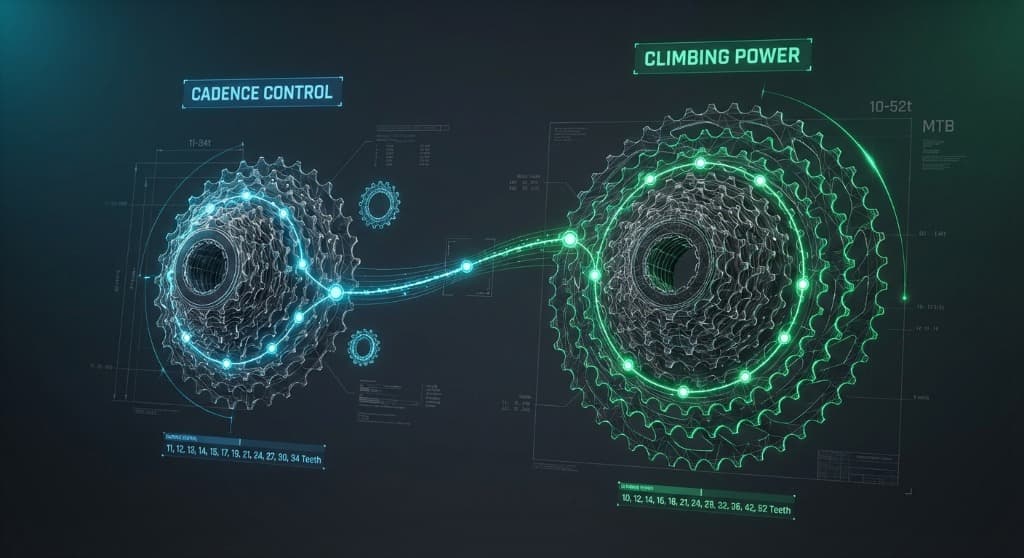
- Range: massive (10-52t = 520%).
- Cons: Large jumps between gears (often 15-20% cadence changes).
2x (Two-By)
- Pros: Tight gear steps (11-34t cassette), maintains optimal cadence on flats.
- Range: Moderate (470-500% typically).
- Cons: Chain drops more likely, limits rear tire width (FD cage interference).
2. The "Mullet" Drivetrain
A "Mullet" build combines Road/Gravel Shifters with a Mountain Bike Rear Derailleur and Cassette. This unlocks MTB range (10-52t) with drop-bar ergonomics.
SRAM AXS (The Gold Standard)
SRAM's wireless ecosystem is natively compatible. Any AXS Road shifter pairs with any AXS MTB derailleur (Eagle XX1, X01, GX).
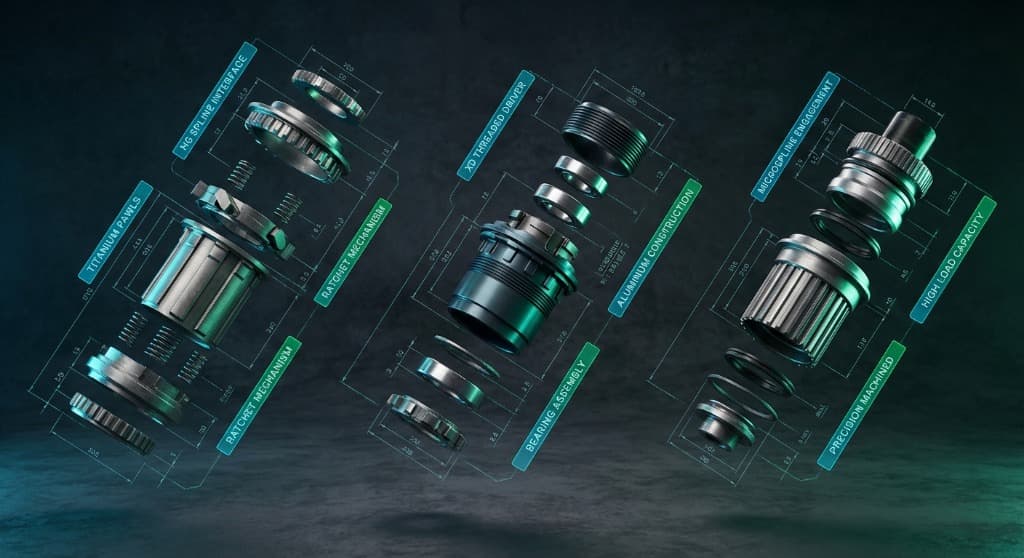
Freehub standards dictate cassette compatibility
- Chain Requirement: Must use 12-speed Eagle chain (Flattop road chains are NOT compatible with Eagle pulleys/cassettes).
- Crankset: Can use 1x Road or MTB crankset.
Shimano GRX / Di2
Shimano is stricter. Mechanical road shifters pull different cable ratios than MTB derailleurs.
- Electronic (Di2): You can mix XT Di2 rear derailleurs with GRX Di2 shifters if you solve the E-Tube project compatibility checks (often requires specific display/junction units).
- Mechanical: Requires a cable pull converter like the Wolf Tooth Tanpan to make a road lever actuate an MTB derailleur.